Creative Diversity UGC Ads for Meta: 10 Distinct Concepts from One Creator Shoot (2026–2027)
Ten variants of the same talking head are not ten ads. This guide shows how to plan creative diversity UGC ads at the brief and shoot stage, so one creator day gives Meta genuinely different concepts to test.
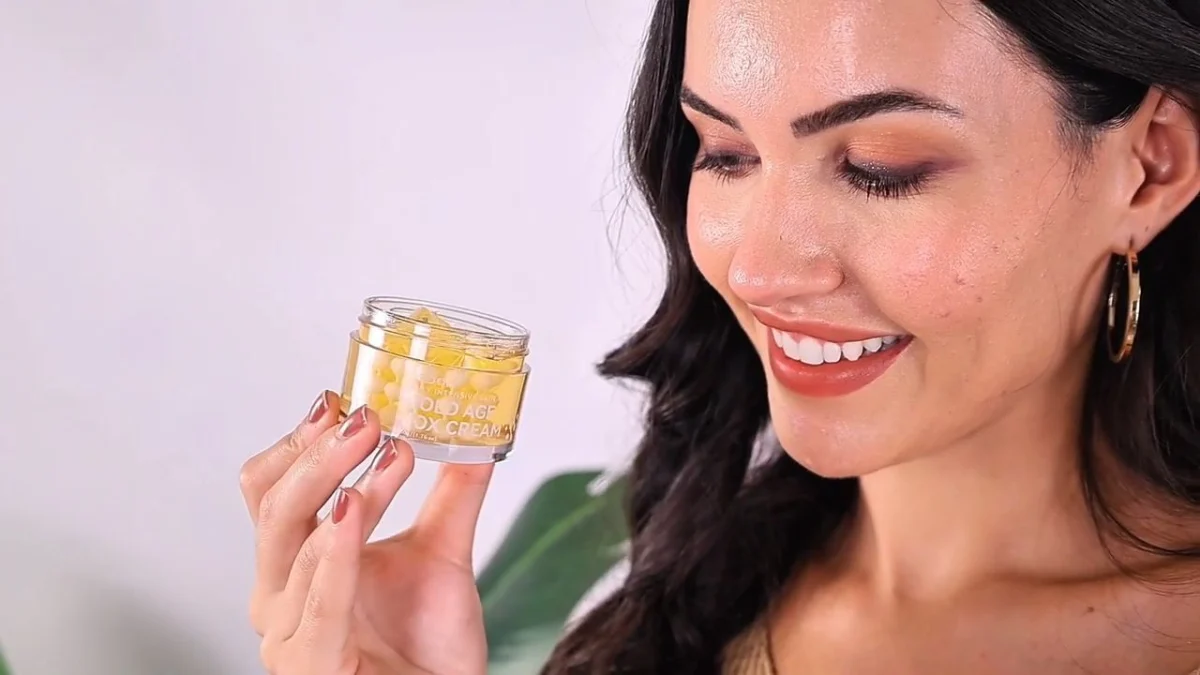
Most brands think creative diversity UGC ads means more edits: a new caption, a different first frame, a swapped music track. On Meta in 2026 that is not enough. When the same creator says the same thing in the same room, the delivery system tends to treat those files as one idea, and your budget piles onto a single concept until it fatigues. If your performance UGC creatives keep plateauing after a week, the fix usually sits upstream, in how the shoot was planned.
In this guide, Prince and the Adverra Studio production team walk through the exact method we use to turn one creator shoot into ten concepts that are different in persona, angle, format, setting and hook. You will get a concept matrix, a shoot-day timeline, an edit naming system, a testing structure for Meta Ads Manager and a checklist you can hand to your team tomorrow. The goal is simple: fewer wasted variants, more real ideas in the auction.
Key takeaways
- Creative diversity is decided in the brief and on set, not in the edit timeline.
- Change at least two big levers per concept: persona, angle, format, setting or talent.
- One well-planned creator day can produce 10 distinct concepts plus 3–5 hooks each.
- Test concepts in one broad ad set and judge them on hook rate, hold rate and CPA, not likes.
- Disclosure and usage rights must be agreed before the shoot, not after the ad wins.
What does creative diversity mean for UGC ads on Meta?
Creative diversity means each ad in your account carries a genuinely different idea — a different person, problem, promise, format or setting — not just a different caption or colour grade. For UGC ads, it means planning distinct concepts before the creator presses record.
Think of diversity at two levels. Strategic diversity is who the ad speaks to and why they should care: the persona, the pain point, the funnel stage, the core message. Executional diversity is how the ad looks and sounds: the hook style, the format (talking head, demo, routine, street interview), the setting, the creator and the edit pace. A healthy account mixes both. An unhealthy one has twenty files that differ only in the first two seconds.
Here is the line we use with clients at Adverra Studio: if you can describe two ads with the same sentence, they are one ad. “A woman in her bedroom talks about how the serum fixed her dullness” is one concept, no matter how many cuts you make. “A working mother shows her 90-second morning routine” and “A skeptical husband tries his wife’s serum on a dare” are two concepts, even if the same product and the same studio day produced them.
Creative diversity UGC ads vs simple ad variations
Variations still matter. Once a concept proves it can sell, three to five hook variants, cut-downs and ratio versions help you scale it. The mistake is using variations as a substitute for concepts. Variations are for optimising a winner; creative diversity UGC ads are for finding one. Brands that skip the concept stage end up optimising an idea the audience already ignored.
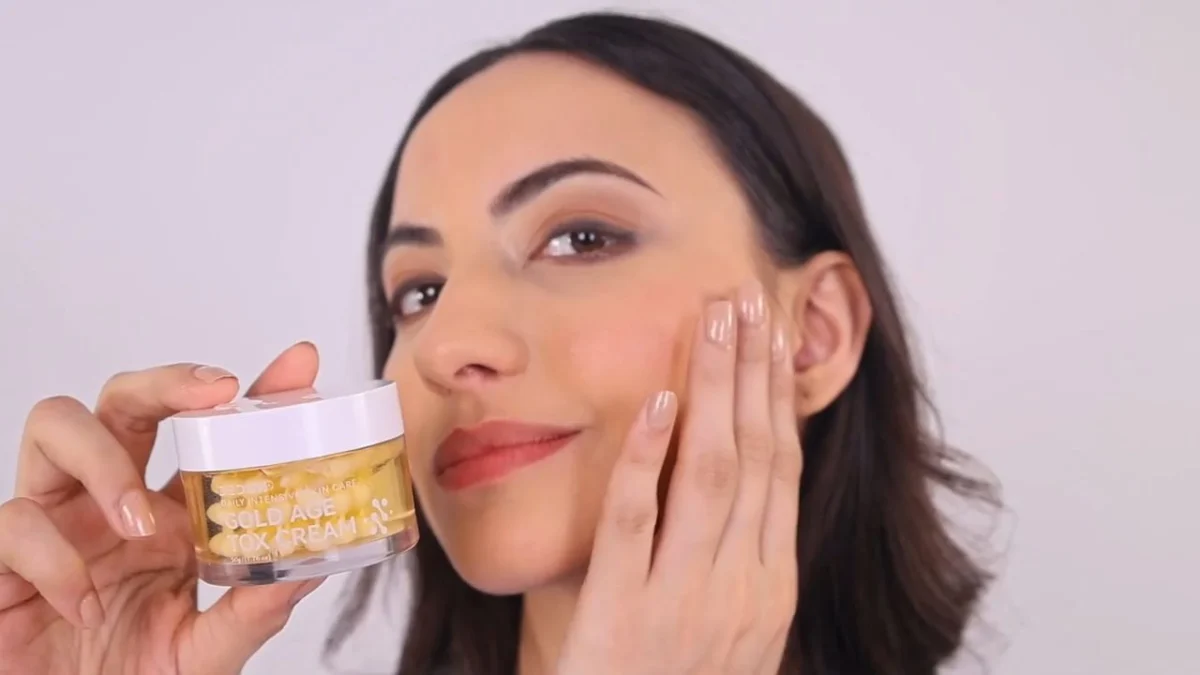
Why do near-identical UGC ads stop working in the Andromeda era?
Meta’s ad retrieval system now matches ads to people largely on what the creative itself signals. When several ads signal the same thing, they compete for the same small slice of people, and spend concentrates on one of them while the rest barely deliver.
Meta’s engineering team described its Andromeda retrieval engine as the system that narrows millions of candidate ads to a shortlist for each person, using far richer models of the ads themselves (see Meta Engineering’s write-up on Andromeda). The practical takeaway that media buyers keep reporting is that lookalike creatives tend to be grouped and treated as one option. Meta has not published an exact similarity threshold, so treat any specific percentage you read online as an estimate, not a rule.
What we see in Indian D2C accounts lines up with this. A skincare brand launches eight “variants”, all filmed by one creator in one bathroom, all opening with “I tried this for 7 days”. One ad takes most of the spend, frequency climbs on a narrow audience, CPA rises in the second week, and the team concludes “UGC stopped working”. UGC did not stop working. The account ran out of ideas, and the platform noticed before the team did. That gap is exactly what creative diversity UGC ads are meant to close.
Signs your account lacks creative diversity
- One or two ads take more than 70% of the ad set’s spend while others stay under a few hundred rupees.
- New ads launched into the same ad set barely get impressions, even with a fresh hook.
- Frequency on prospecting climbs while reach flattens.
- Your creative report shows ten ads but you can only name two distinct messages.
- Performance recovers briefly after every new batch and then slides again within days.
Independent Meta advertisers make the same point. Jon Loomer’s breakdown of creative diversification under Andromeda recommends feeding Meta a real mix of formats and ideas rather than many near-duplicates. Our view is the same, with an Indian production twist: the cheapest place to create diversity is the shoot plan, because once the camera is packed away, no edit can invent a new persona.
Which levers actually make two UGC ads different?
The levers that create real difference are persona, angle, format, setting and talent, followed by funnel stage and hook style. Caption text, music, colour grade and the end card are polish levers. Change at least two big levers for every new concept.
Use this table when you review a brief. If a proposed concept only changes items from the right column, it is a variation, not a concept. Keep it, but file it under hooks and cut-downs.
| Lever | Real diversity (new concept) | Cosmetic change (variation) |
|---|---|---|
| Persona | College student vs new mother vs gym regular | Same person, different outfit |
| Angle / message | Price comparison vs ingredient proof vs routine fit | Same message, reworded caption |
| Format | Talking head vs product demo vs street-style interview vs skit | Same format, faster cuts |
| Setting | Bathroom vanity vs office desk vs kitchen vs car | Same room, different angle |
| Talent | Different creators, ages, genders, languages | Same creator, new hairstyle |
| Funnel stage | Problem-aware cold vs offer-led retargeting | Same stage, different CTA button |
| Hook style | Visual pattern interrupt vs bold claim vs question vs result-first | Same hook, different font |
Not every lever costs the same. Persona and talent are expensive to change because they need new people. Setting and format are cheap if you plan mini-sets in one studio. Angle and hook are almost free if your script writer does the work before the shoot. That is why our method leans on angle, format and setting first, and adds a second or third creator only where the persona truly demands it.
How many creators do you need for creative diversity UGC ads?
For most D2C brands spending under a few lakh a month on Meta, one strong creator plus one contrasting creator covers the first test cycle. A single creator can credibly play two or three personas (the busy professional, the skeptic, the gifting buyer) if the scripts are honest to who they are. Beyond that, rotate creators every cycle. Adverra Studio works with a network of 500+ verified UGC creators, so rotating faces is a casting decision, not a bottleneck.
How do you plan 10 different concepts from one creator shoot?
Start from the customer’s reasons to buy, map each reason to a different format and setting, then write a short script for each before the shoot. Ten concepts usually come from three to four personas, five to six angles and four to five formats.
This is the six-step planning workflow our team follows. It takes about two working days before the shoot and saves far more than that in wasted media spend.
- List buying reasons. Pull them from reviews, support tickets, marketplace Q&A and sales calls. Aim for 8–12 real reasons.
- Pick three or four personas. Match each to who actually buys, not who you wish bought.
- Map reasons to formats. Give each reason the format that proves it best: demo for efficacy, routine for convenience, comparison for price.
- Assign settings. Plan two to four mini-sets in one location so each concept looks and feels different.
- Write ten short scripts. Hook, problem, proof, CTA — 20 to 45 seconds each, plus three alternate hooks.
- Build the shot list. Group concepts by set and wardrobe so the day runs in blocks, not chaos.
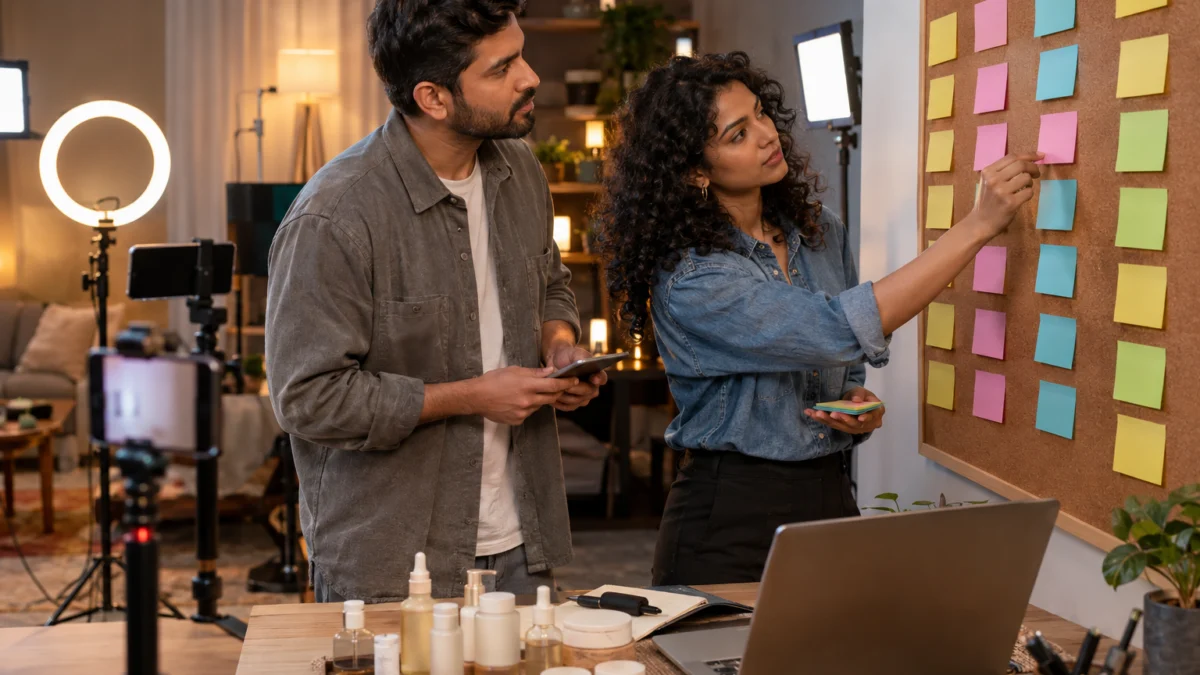
Below is a sample concept matrix for a fictional skincare serum, written fresh for this guide. Swap in your own product, but keep the principle: every row changes at least two of persona, angle, format and setting.
Concepts 1–4: problem and proof angles
- 1. The honest review (talking head, bedroom). Persona: 24-year-old working woman. Hook: “I was not going to post this, but my colleagues keep asking.” Angle: visible result after a few weeks of use, stated without exaggerated claims.
- 2. The texture demo (macro close-ups, vanity). No face for the first three seconds — just the dropper, the texture on the back of the hand, the absorb. Angle: “not sticky in Delhi humidity.”
- 3. The skeptic test (skit, living room). A partner or flatmate rolls their eyes, tries it, and comes back. Angle: social proof through a reluctant user.
- 4. The ingredient explainer (talking head + on-screen text, desk). Angle: what is inside and why it matters, kept to claims the brand can substantiate.
Concepts 5–7: routine and lifestyle angles
- 5. The 60-second morning routine (GRWM, bathroom). Angle: fits into a rushed weekday. The product appears at step three, not step one.
- 6. The office drawer (POV, office desk). Persona shift to the busy professional. Angle: portable, quick reapplication before a meeting.
- 7. The travel kit (packing shot, suitcase on bed). Angle: travel-size, flight-friendly, wedding-season ready.
Concepts 8–10: offer and comparison angles
- 8. The price breakdown (talking head + props, kitchen table). Angle: cost per use compared with a salon visit. Use only numbers the brand can stand behind.
- 9. The gifting angle (unboxing, festive set). Persona: buying for a sister or friend. Angle: Diwali, Rakhi or birthday gifting.
- 10. The street-style question (two-person interview, balcony or terrace). The creator asks a friend “What is in your skincare bag?” Angle: discovery and curiosity for cold audiences.
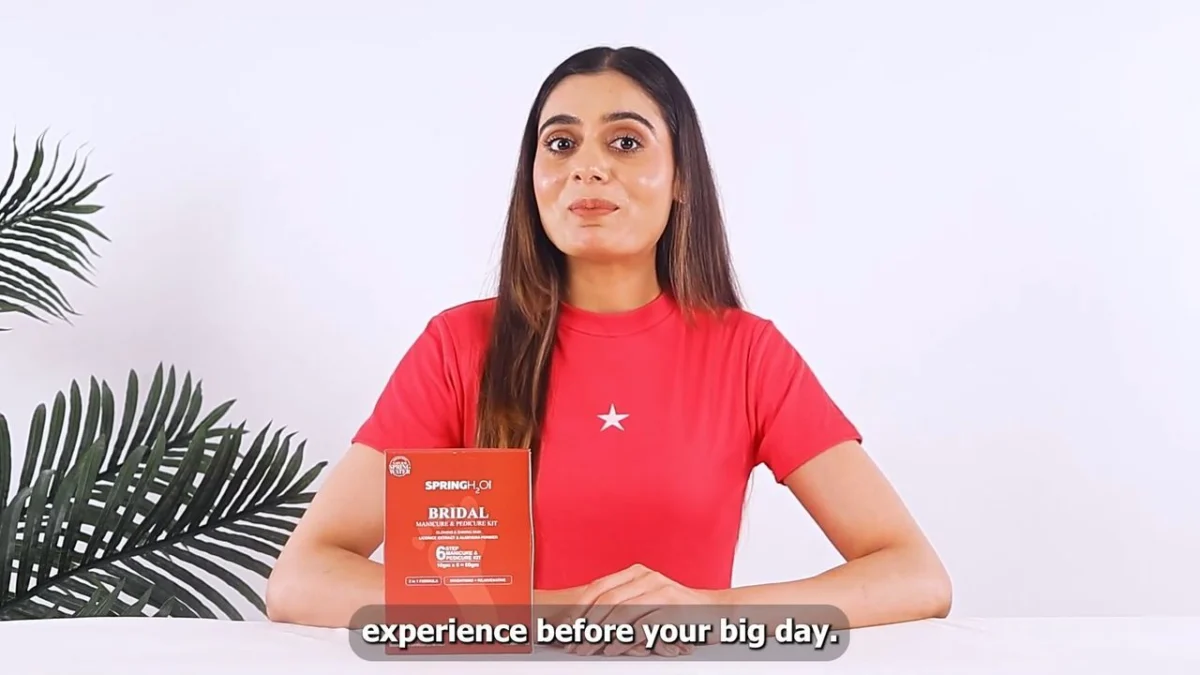
Notice what this matrix avoids. It does not repeat “I tried this for 7 days” ten times. It does not give every concept the same bedroom. And it gives the creator real roles to play rather than one script read ten ways. If you want help building this matrix around your own reviews and margins, our UGC video shoots start with exactly this concept workshop.
How should the shoot day be scheduled to capture all 10 concepts?
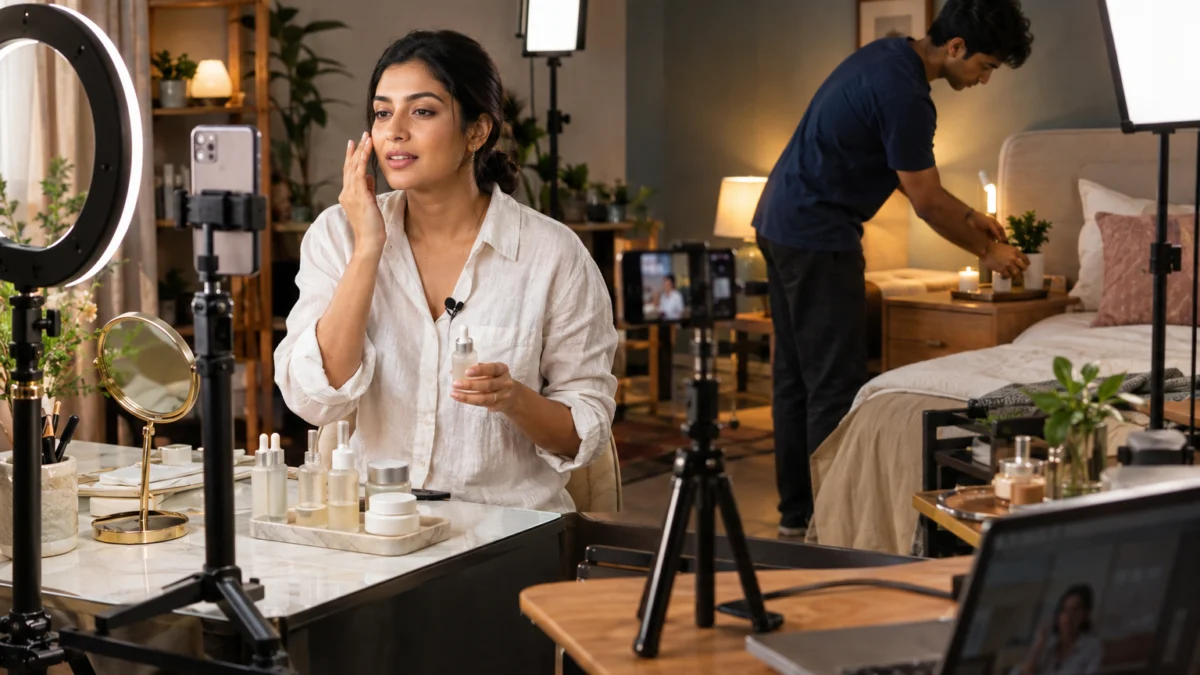
Shoot in blocks by set and wardrobe, not in concept order. A realistic single-creator day captures ten concepts in about eight to nine hours if scripts are locked, sets are pre-dressed and hooks are filmed as separate pick-ups.
The biggest time killer on UGC shoots is resetting. Every time the creator changes outfit, the set changes, or the light is moved, you lose 20–30 minutes. So we sequence the day by set, and within each set by wardrobe. Here is a sample timeline we would use for the ten concepts above; it is where creative diversity UGC ads are won or lost on the day.
| Block | Set | Concepts filmed | What to capture |
|---|---|---|---|
| Block 1 (morning light) | Bathroom / vanity | 2, 5 | Macro texture shots, routine sequence, 3 hook openers each |
| Block 2 | Bedroom | 1, 7 | Talking-head review, packing sequence, B-roll of product on bedside |
| Block 3 | Desk / office corner | 4, 6 | Explainer with space for on-screen text, POV drawer shot |
| Lunch + reset | — | — | Review takes on a laptop, flag missing pick-ups |
| Block 4 | Kitchen / dining table | 8, 9 | Price props, festive unboxing, gift-wrap hands |
| Block 5 (second person on set) | Living room, balcony | 3, 10 | Skit reactions, two-person interview, wide and tight angles |
| Block 6 | Any clean wall | All | Hook pick-ups, CTA lines, Hindi and English alternates |
Shot-list rules that protect diversity
- Film hooks separately. Record three opening lines per concept as clean pick-ups so editors can test hooks without re-shooting.
- Frame for 9:16 first. Keep faces and product in the centre safe area so the same take works in 4:5 and 1:1 crops.
- Change something visible per concept. Outfit, set, prop or camera distance — the viewer should feel a new video in the first frame.
- Capture B-roll per set. Ten seconds of hands, product and environment for each block gives editors cut-away options.
- Record room tone and a clean voice track. It keeps audio usable when you later add voiceovers or language versions.
Our turnaround for video is typically 5–7 business days from brief approval, and that timeline assumes the pre-production work above is done. Skipping the planning does not make the shoot faster. It makes the edit longer and the ad account weaker. To plan a shoot like this with our team, call +91 90153 33841.
How do you edit and name variants so Meta sees real diversity?
Edit each concept as its own master first, then create hook and ratio variants underneath it. Name files by concept, persona, format and hook so your reporting shows which idea won, not just which file won.
The edit is where most diversity gets accidentally destroyed. Editors under deadline reuse the same opening B-roll, the same music bed and the same caption style across every concept, and suddenly ten different scripts look like one ad. Give each concept its own visual signature: a different opening frame, a different caption treatment, a different pace. Then keep variants honest by changing only the hook within a concept. Good creative diversity UGC ads look like different videos from the very first frame.
A naming convention that makes creative diversity UGC ads measurable
We use a simple pattern: C05_P2_GRWM_H2_916. That reads as concept 5, persona 2, format GRWM, hook 2, ratio 9:16. When you export results from Ads Manager, you can group by the concept code and see which ideas carry the account. It also makes the creative report usable for the next brief, because you know which angles and personas earned the spend.
Placement and format specs to respect
- 9:16 for Reels and Stories, with text and faces kept clear of the top and bottom UI zones.
- 4:5 for Feed, cropped from the same 9:16 master where the framing allows.
- 1:1 only where a placement needs it; it is the least important ratio for most UGC.
- Burned-in captions on every version, because a large share of viewers watch with sound off.
- Language versions count as diversity when the creator or voice changes, not when you only translate subtitles.
That last point is underused in India. A Hindi or Hinglish voice over the texture-demo concept is a genuinely different ad for a Tier 2 audience than the English talking head. If you want to extend one shoot into regional versions, Hindi and English voiceover ads recorded over your existing B-roll are a cost-efficient way to add concepts without another shoot day.
How do you test creative diversity UGC ads without wasting budget?
Launch concepts, not variants, into one broad prospecting ad set, give each enough impressions to show a signal, and judge them on hook rate, hold rate and cost per purchase. Only after a concept wins do you add its hook and ratio variants.
Here is a practical structure for testing creative diversity UGC ads that we recommend for Indian D2C brands running Meta Ads with conversion objectives. It is a starting point, not a law; adjust it to your budget and margins.
- Batch 1: upload 6–10 concept masters (one hook each) into a single broad ad set. Avoid splitting them across many tiny ad sets.
- Read early signals at 3–5 days: 3-second view rate (hook rate), average watch time or ThruPlay rate (hold rate), and click-through rate.
- Read money signals at 7–10 days: cost per purchase or cost per add-to-cart, depending on your volume.
- Batch 2: for the two or three winning concepts, launch their 3–5 hook variants and the 4:5 versions.
- Retire, don’t delete: pause losers but keep their codes in your report; a losing angle can win with a different persona later.
Rule of thumb from our edit room: if a concept gets almost no spend, check whether it looks too much like another ad in the same ad set before you blame the idea. Often the platform simply grouped it with an older winner.
Diversity also protects results over time. When Snackible worked with us on UGC ads, the brand saw CPA fall 42% within 30 days and a 3.5x ROAS, which you can read about in the Snackible UGC ads case study. Every account is different, but the lesson travels: a pipeline of distinct concepts beats a pile of lookalike variants. If you want a second pair of eyes on your current account, call or WhatsApp +91 90153 33841 and ask for the free Meta Ads audit.
What mistakes kill creative diversity in UGC ads?
The most common mistakes are writing one script and asking for ten reads, shooting everything in one setting, reusing the same opening frames in the edit and testing variants before concepts. Each one makes your ads look alike to viewers and to Meta.
- One script, many takes. Ten reads of the same lines are one concept with ten performances.
- One room for everything. The background is part of the creative signal; change it.
- Same first frame. If every ad opens on the creator’s face at the same distance, the hook variety is invisible.
- Hook-only testing. Testing twelve hooks on one concept tells you about hooks, not about whether the concept was right.
- Unsubstantiated claims. “Cures acne in 3 days” is not an angle; it is a compliance problem. ASCI expects claims to be backed by evidence.
- Forgetting disclosure and rights. If a creator’s content runs as an ad or a partnership ad, agree usage rights, duration and disclosure in writing before the shoot. The Advertising Standards Council of India publishes the influencer and claims guidelines to follow; this is general guidance, not legal advice.
Advanced tips for teams already testing at scale
Once you run more than twenty active creatives, build a concept library: a sheet with every concept code, persona, angle, format, setting and result. Before each new brief, look for empty cells, such as personas you have never tested or formats you have never tried. Also rotate creators deliberately; a new face on a proven angle is often the fastest way to refresh a winner without losing the message that works.
What should your creative diversity checklist include?
Before the shoot, confirm personas, angles, formats, settings and scripts; on the day, confirm hooks, B-roll and ratios; after the edit, confirm naming, captions and compliance. Use the list below as a sign-off sheet for creative diversity UGC ads, whether your team or an agency runs the shoot.
- 8–12 buying reasons pulled from real customer language.
- 3–4 personas, each matched to a script the creator can say honestly.
- 10 concepts, each changing at least two big levers.
- 2–4 mini-sets planned in one location, with props listed per set.
- 3 hook pick-ups per concept, filmed separately.
- 9:16 masters framed for 4:5 crops, captions burned in.
- File names using concept, persona, format, hook and ratio codes.
- Usage rights, duration and ASCI disclosure agreed in writing.
- Launch plan: concepts first, variants only for winners.
How will creative diversity for UGC ads change in 2026–2027?
Expect Meta to lean even harder on creative signals for targeting, more automated variations generated inside Ads Manager, and higher demand for distinct human concepts that automation cannot invent. Brands will need fewer files but more ideas.
Automated tools can already resize, recaption and add music to your ads. That makes cosmetic variations cheap and, increasingly, worthless as a source of difference. What automation cannot do is send a real creator to a kitchen to explain why your snack beats a canteen samosa, or film a skeptical father trying your hair oil. In that world, creative diversity UGC ads become a planning discipline rather than an editing trick. We also expect more regional-language concepts, more creator rotation and more short series (episode one, episode two) that give the algorithm a sequence of related but distinct ideas. If you are weighing synthetic creators, our comparison of AI-generated versus human UGC covers where each fits.
What does a diversity-ready UGC shoot cost?
At Adverra Studio, a single tested creative costs ₹12,000 on the Tester plan, a three-creator Growth plan is ₹33,000 and a monthly pipeline of ten creatives is ₹1,00,000 a month. The right plan depends on how many concepts and creators you need per cycle.
| Plan | What you get | Delivery | Price |
|---|---|---|---|
| Tester | 1 UGC video · 1 creator · 3 hooks · 9:16, 1:1, 4:5 | 7-day delivery | ₹12,000 |
| Growth | 3 UGC videos · 3 creators · 5 hooks each · all ratios + thumbnails | Priority 5-day delivery | ₹33,000 |
| Monthly | 10 UGC creatives a month · dedicated account manager · monthly review | Rush delivery available | ₹1,00,000 / month |
Plans as listed on adverrastudio.com. Call or WhatsApp +91 90153 33841 for a custom quote.
For creative diversity specifically, the Growth plan is the smallest setup that gives you three different faces, and the Monthly plan is built for brands that want a steady flow of new concepts every cycle. For a wider view of market rates, read our guide to what UGC videos cost in India. You can also email the brief to [email protected] and we will map it to a concept matrix before quoting.
Creative diversity UGC ads: frequently asked questions
Short answers to the questions Meta Ads managers ask us most about planning distinct UGC concepts.
Creative diversity means every ad in your account carries a genuinely different idea: a different persona, message, format, setting or creator. Changing only captions, music or colour creates variations, not new concepts. On Meta, distinct concepts help delivery reach different groups of people instead of competing for the same narrow audience.
Most Indian D2C brands do well launching six to ten concept masters in one broad prospecting ad set. Give them three to five days for hook and hold signals and seven to ten days for cost per purchase. Add hook and ratio variants only for the two or three concepts that win.
Yes, if the concepts are planned before the shoot. One creator can cover two or three honest personas, several formats such as review, demo, routine and unboxing, and two to four mini-sets in one location. For persona-heavy products, add a second contrasting creator to keep the ideas truly distinct.
Not on their own. A new hook on the same concept is a variation that helps you optimise a winner. Creative diversity comes from changing bigger levers like persona, angle, format and setting. Test concepts first to find the right idea, then use three to five hook variants to scale it.
Andromeda is Meta’s ad retrieval system, which relies heavily on what each creative signals to match ads with people. Media buyers report that lookalike ads tend to be grouped and share delivery. Meta has not published an exact similarity threshold, so the safe approach is planning clearly different concepts.
When a creator’s content promotes your brand under a paid arrangement, ASCI guidelines expect the material connection to be clear, especially for partnership ads on the creator’s handle. Agree disclosure, usage rights and duration in writing before the shoot. This is general guidance; check the latest ASCI rules or a lawyer for specifics.
Your next step: once your concept matrix is ready, every concept still needs an opening that stops the scroll. Use our guide to UGC script hooks that convert to write three strong openers for each of your ten concepts before the shoot day.
From one shoot to ten distinct concepts
The five-stage workflow Adverra Studio uses to build creative diversity into every UGC shoot.
Mine buying reasons
Pull 8–12 real reasons to buy from reviews, support chats and marketplace Q&A.
Map personas and angles
Match each reason to a persona and the format that proves it best.
Script ten concepts
Write hook, problem, proof and CTA for each concept, plus three alternate hooks.
Shoot in set blocks
Group concepts by set and wardrobe so one creator day covers every idea.
Test concepts, then variants
Launch concept masters first; add hook and ratio variants only for winners.
Is your account running ten ads or one idea?
Free Meta Ads audit worth ₹5,000 — we review your current creative and suggest 3–5 high-converting angles.