Regional Voiceover Test Plan for Indian D2C Brands: Language Brief, QA and Results Sheet
A regional voiceover testing plan that separates recording quality from market response. Copy the language brief, release checklist and results-sheet fields before you spend.
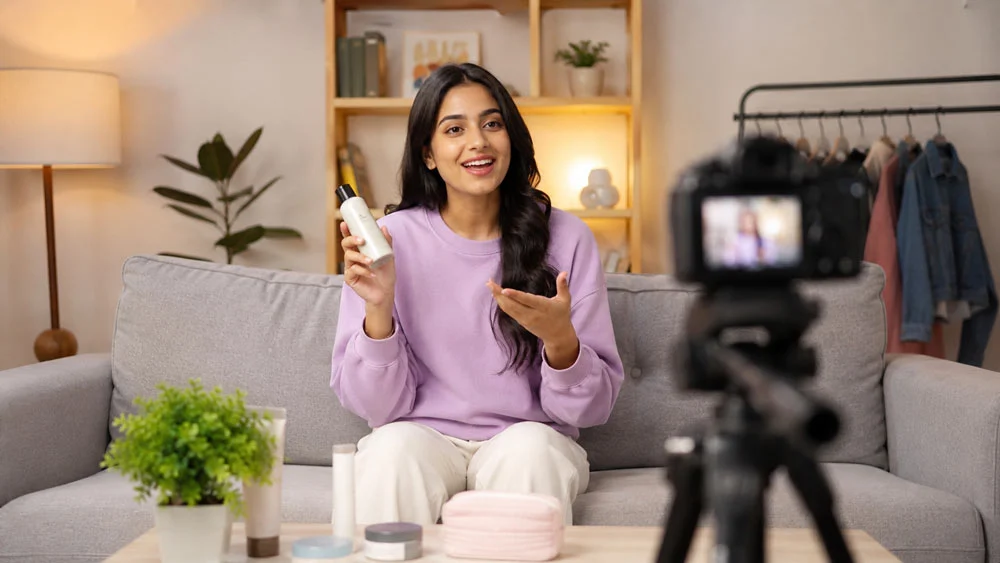
A regional voiceover testing plan should tell you whether the language adaptation helps the same audience understand the same offer. If an English creative works and its Tamil version struggles, you still need to separate the script, voice, delivery and buying journey before judging the market. For teams adapting existing footage, Adverra Studio’s voiceovers in Indian languages provide the relevant production route.
This guide is for Indian D2C founders, performance marketers and beauty or skincare brand managers who need an experiment they can actually review. You will build one hypothesis, approve the language before recording, release comparable cuts and record a decision with its limitations. The examples are hypothetical planning exercises, not client results or guaranteed performance.
Key takeaways
- Change narration deliberately; log every other change.
- Use an independent native reviewer before and after recording.
- Compare within a market before comparing different markets.
- Preserve an inconclusive outcome when purchases are sparse.
- Obtain recording, adaptation and paid-use permissions before launch.
What should a regional voiceover testing plan actually prove?
Test whether a reviewed language adaptation changes response within a defined audience and offer. A language-versus-language comparison in different states also changes the market, so it cannot isolate narration on its own.
Write a falsifiable question
Use this hypothesis template: “For our eligible audience in [market], replacing [control narration] with [adapted narration], while holding [offer, footage, landing route and delivery settings] consistent, will improve [primary business metric] enough to justify [next action].” Fill the brackets before casting. An intention such as “regional should work” cannot tell your team which assets to approve or when to stop.
In a hypothetical moisturiser test, compare an approved English control with a Hindi adaptation among the same eligible audience, subject to your platform’s experiment options. Keep the product demonstration and offer unchanged. If you instead compare English in Mumbai with Tamil in Chennai, call it a market-and-language exploration. That can still guide a business decision, but language alone is not the explanation.
Define the control and the commercial boundary
Write down the control creative ID, current script, destination, available inventory, shipping eligibility and primary conversion event. Add the maximum spend your business can absorb and the observation window you will review. These are business choices, not universal benchmarks. If delivery or checkout availability changes, pause the interpretation rather than quietly moving the goalposts.
A regional voiceover testing plan also needs a comprehension check. Ask a native speaker who has not seen the source script to explain the product, offer and requested action after watching. Their retelling can expose a mistranslation before an expensive performance test begins. It does not prove an ad will sell; it proves you have a more credible asset to test.
| Question | Keep consistent | Log if changed |
|---|---|---|
| Narration effect | Audience, footage, offer, destination | Voice register, script length, subtitle language |
| Regional market exploration | Core proposition and measurement method | Geography, delivery conditions, competition |
| Creative package comparison | Commercial objective and eligibility | Narration, visuals and landing-page language |
Build the language brief before recording
Build one source brief and a separate adaptation sheet for each language. State the intended audience, persuasion goal and pronunciation rules; translating sentences without these inputs makes review subjective.
Copy this regional voiceover testing plan brief
Start with: product and SKU; approved benefit; evidence or claim owner; audience and market; desired spoken register; source script version; offer; final action; footage timecodes; caption language; destination URL; voice sample approver; native reviewer; usage permission owner. Leave unknown items visibly unapproved in your internal sheet. Do not send the artist a “final” brief with unresolved claims.
For a Hindi voiceover brief, specify whether you want conversational Hindi, Hinglish or a more formal register, and give examples of words that should remain in English. Record a spoken pronunciation guide for the brand, ingredients and product names. Avoid stereotypes such as “make it sound local”; describe pace, warmth and customer familiarity in terms an artist can perform.
For Tamil, distinguish the desired spoken register from written copy. Ask the reviewer whether an expression sounds natural when spoken at the intended pace, then document the approved alternative. Do not treat a city or state as a single language preference. Customer support conversations, existing purchases and audience research are more useful starting inputs than assumptions about every resident.
Use a line-by-line adaptation sheet with source meaning, proposed line, literal back-translation, claim notes and approval. Back-translation helps a non-speaker understand the intended message, but it cannot replace native judgement about tone or pronunciation. Keep the persuasive job of each line visible: opening problem, product explanation, substantiated benefit and action.
| Brief field | Hypothetical skincare instruction | Approval owner |
|---|---|---|
| Opening intent | Describe a heavy-feeling routine without inventing a skin diagnosis | Brand marketer |
| Benefit boundary | Use only the product claim already approved for this SKU | Claims owner |
| Voice register | Calm, conversational; avoid exaggerated medical authority | Creative lead |
| Final action | Keep offer and destination consistent with the control | Performance lead |
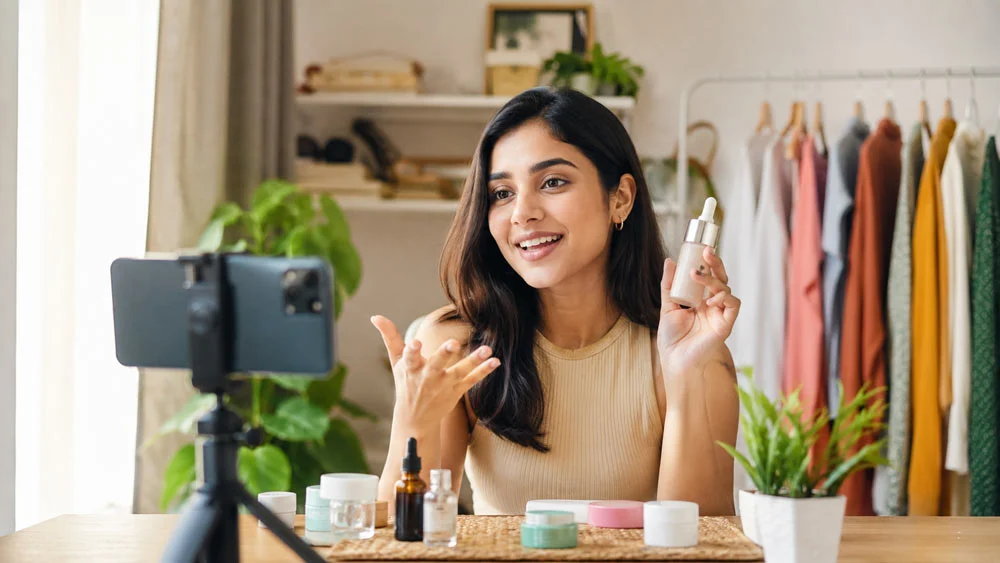
Run native script review before the full session
Approve a short sample and native speaker script review before booking the full read. The reviewer should check meaning, spoken fluency, claims and pronunciation independently of the artist’s delivery.
Review meaning before timing
First ask what each line means, then ask whether a customer would say it that way. A grammatically correct sentence can still sound like packaging copy read aloud. Mark literal translations that feel stiff, phrases that imply stronger benefits than the source and cultural references that only work in the original language. Resolve these issues in writing before anyone records multiple polished takes.
Adverra Studio’s practical recommendation for this workflow is a sample gate: approve the opening and the hardest product sentence together. A friendly opening can hide weak technical pronunciation later in the script. Have the reviewer listen without the source text, paraphrase the meaning and flag anything that needs replaying. Store their comments against a script version, not in an unsearchable voice-note thread.
An original example for planning might begin, “Does your moisturiser feel heavy before the day has started?” The adaptation should preserve the everyday problem without implying a treatment outcome. Do not publish our English wording as an approved product claim. Your claim owner must decide whether the actual SKU and evidence support the full message in every language.
Keep the performance human and the evidence honest
UGC means user-generated content: creator-made material that shows or discusses a product in an everyday style. A dubbed creator video must not manufacture a personal experience the person never had. If the original performer is visibly speaking, check whether replacing their voice changes the apparent endorsement. Product-only footage or a clearly separate narrator may be a cleaner creative choice.
Agree on permitted adaptation, paid use, channels, duration, territories and talent permissions before delivery. Whitelisting is commonly used for permission to advertise through a creator identity; partnership ads are platform-supported ads involving a creator or partner identity. Neither permission should be assumed from owning an exported video. Include ASCI disclosure review whenever creator or influencer advertising is involved; this is an operational reminder, not legal advice.
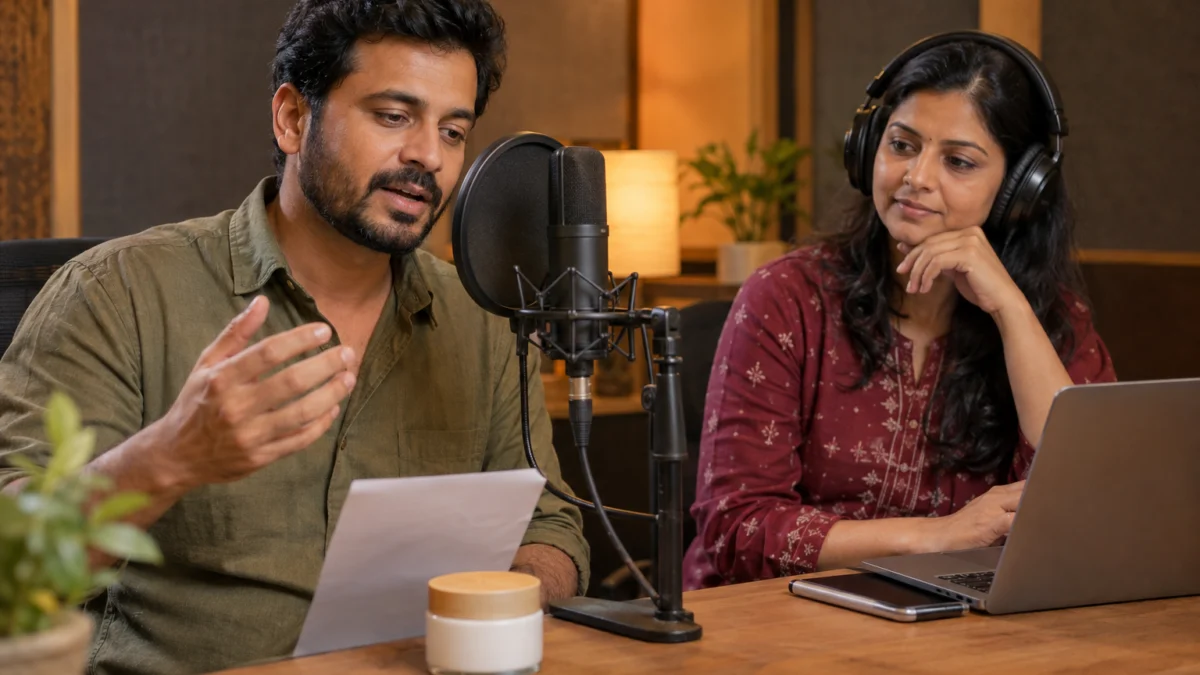
How do you apply a voiceover localisation checklist?
Check the approved script against the final exported video, not just the isolated audio file. A voiceover localisation checklist should cover meaning, intelligibility, timing, captions, claims and permission before the media buyer receives the asset.
Apply the regional voiceover testing plan QA gate
Use separate pass, revise and block labels. “Pass” means the designated owner approves that check; “revise” means a specific correction is required; “block” means the asset must not launch. Give every note a timecode and a replacement instruction. “Sounds wrong” is hard to fix; “at the ingredient line, use the approved pronunciation from sample B” gives the editor a clear task.
For Tamil voiceover quality checks, have a native listener review the final mix on an ordinary phone speaker as well as headphones. Check consonants, phrase endings and whether music masks the benefit or action. Do not invent a universal loudness setting for every placement. Ask the audio editor to deliver a clean voice track and mixed export that meet the current delivery requirements of the channel.
Match subtitles to the approved meaning and inspect line breaks, punctuation and display duration on a phone. A subtitle can be linguistically correct yet disappear before a viewer finishes reading. For 9:16 vertical exports, keep important text and product detail away from interface overlays and preview the actual placement. A square library reference is not automatically a ready-to-run Reels export.
Check each required crop separately. Instagram Reels, YouTube Shorts and Meta Ads placements can present the same export differently; a LinkedIn cut may need a different pacing decision for its audience. If you change the edit for a channel, log that as a creative change. Do not credit the voice language for a result caused by a new opening shot or a different offer card.
| Gate | Check | Release evidence |
|---|---|---|
| Language | Meaning and pronunciation match the approved adaptation | Native reviewer and script version |
| Picture and sound | Demonstration, narration and captions agree | Timecoded final-mix sign-off |
| Claims and permissions | Approved benefit, talent use and disclosure reviewed | Named owner approval |
| File delivery | Correct crop, destination and tracking | Media buyer preview record |
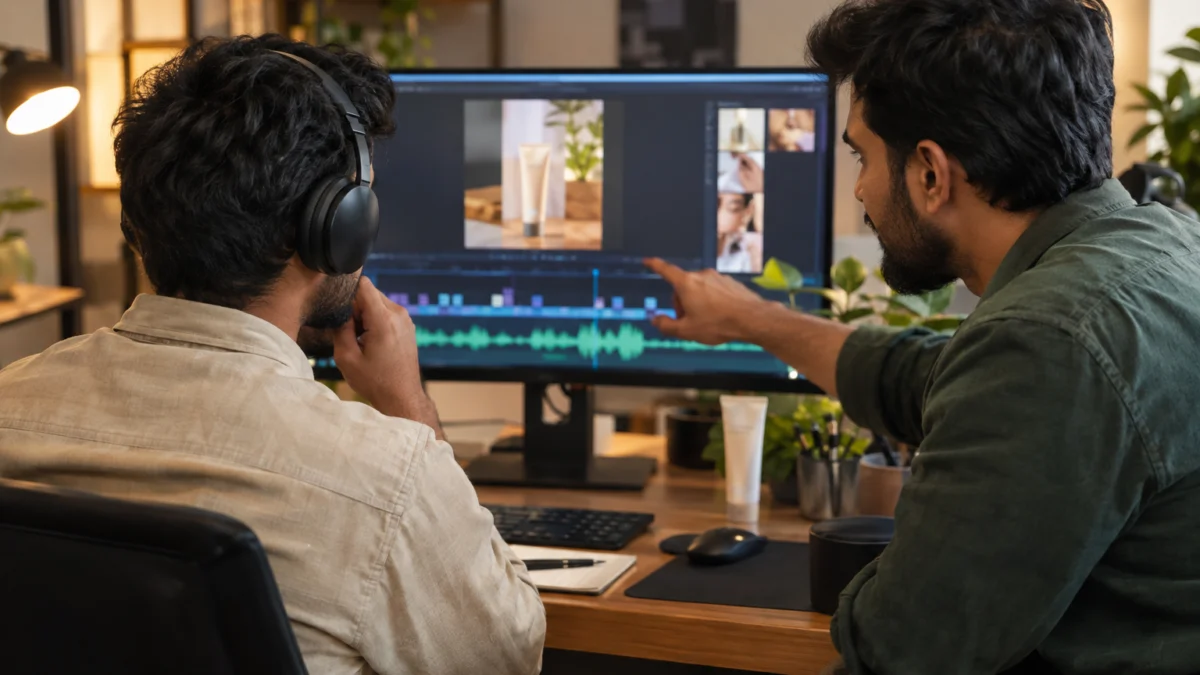
Set up the regional voiceover testing plan fairly
Use a platform experiment where it fits your objective and keep the comparison conditions explicit. If you cannot control delivery or prevent audience overlap, label the result directional and record those limitations.
Release one clean multilingual creative experiment
A multilingual creative experiment starts with an asset manifest: language, script version, voice sample, reviewer, export version and tracking label. Use a naming pattern such as “product_market_language_script_mix_date”. A media buyer should be able to trace every live ad to its final approved file without opening six message threads. Keep working drafts out of the delivery folder.
Avoid bundling a new language with new footage, a discount and a different landing page on the first test. If customers need a translated landing page to purchase, build it, but identify the comparison as a complete language experience. That is a useful business test with a different question. Your regional voiceover testing plan should say which interpretation is allowed before results arrive.
Google’s language targeting guidance is a starting reference for reviewing channel settings. Check the live platform documentation and your account options before launch; a language setting should not be treated as a perfect census of a viewer’s spoken preference. Keep geography, eligibility and chosen language settings in the experiment log.
For regional language ad testing, review the buying journey alongside the media setup. Can the customer understand the product page, delivery conditions, payment steps and support response? If a native-language ad routes people into an unfamiliar checkout, a poor result may identify a journey problem. It does not prove the audience dislikes the language or the product.
Launch only after the media buyer previews sound-on and sound-off behaviour, checks the destination and confirms the conversion event records correctly. Record the start time, reporting timezone and attribution settings. Use comparable windows when reviewing variants, and allow for the purchase delay relevant to your account. Do not repeatedly edit the live script while calling it the same experiment.
Read the regional ad results sheet without false winners
Read delivery, comprehension signals and business outcomes together. A regional ad results sheet should preserve spend, sample size and attribution limitations so that “inconclusive” remains a legitimate decision.
Copy these regional voiceover testing plan results fields
Create columns for test ID, question, market, audience, language, creative ID, script and mix version, reviewer status, launch time, spend, impressions, chosen video-view event, link clicks, landing-page views, purchases, revenue if reliable, attribution window and observation cutoff. Add one column for material changes and another for the next action. Raw counts matter because a strong-looking percentage can hide a tiny sample.
Calculate click-through rate as link clicks divided by impressions when that is the specific CTR definition you are reporting. Hook rate is an opening-attention measure, but teams use different view events and denominators; write yours down. Calculate cost per purchase as spend divided by attributed purchases only when purchases exist. Zero purchases means the ratio is undefined, not a convenient zero-cost result.
Read the funnel in order. Weak early retention can suggest an opening or delivery issue; strong clicks with weak landing-page engagement can point towards a mismatch after the ad. These are diagnostic hypotheses, not automatic conclusions. Check tracking, placement mix and the final export before commissioning another voice artist. A language adaptation can be excellent and still carry an offer that does not convert.
| Observed pattern | Check first | Recorded decision |
|---|---|---|
| Limited delivery | Eligibility, settings, spend and overlap | Insufficient exposure; do not reject language |
| Attention but weak clicks | Promise, clarity and action | Review message before expanding languages |
| Clicks but weak purchases | Destination, stock, checkout and conversion lag | Investigate buying journey |
| Few purchases in either variant | Raw counts and uncertainty | Inconclusive; preserve the control |
| Consistent commercial signal | Comparable conditions and repeatability | Confirm before larger rollout |
Adverra Studio recommends a written review note with three sentences: what happened, what could explain it and what you will do next. An example is: “The adapted cut generated usable traffic, but purchases are too sparse for a commercial winner. The destination remained English and checkout drop-off needs review. Keep the control and test the buying journey before adding another language.” This is a hypothetical decision note, not a result claim.
Plan the next test and its budget
Fund the smallest comparison that can answer your question and protect a separate correction allowance. Language test budget planning should include adaptation, talent, review, editing, permissions and media exposure rather than treating recording as the whole cost.
Scope the cost before expanding the matrix
Use a worksheet with rows for source-script cleanup, language adaptation, voice samples, recording, independent review, captions, mixing, export crops, licensed usage and media spend. Add estimated cost, quote owner, approval status and actual cost columns. No universal fee or spend threshold can tell every D2C founder whether their own test will be informative. Use your margin, historical acquisition economics and available evidence to set the boundary.
Voiceover videos at Adverra Studio are quoted per campaign. Do not apply a UGC filming package price to a regional narration brief: the scope is different. Send the approved source script, footage length, proposed languages, crops, revisions and usage requirements for a scoped quote. If you need clarification, call +91 90153 33841 or send the brief to [email protected].
Set stop rules before launch: stop for a language or claim defect; pause for broken tracking or unavailable stock; review at the agreed spend or observation boundary; expand only when your evidence supports the next commitment. If the budget cannot expose several variants meaningfully, reduce the number of variants. Spreading a small allowance across many languages can produce many inconclusive rows instead of one useful decision.
Avoid these common mistakes and prepare the next round
Do not choose language only from a state map, approve scripts only through back-translation, speed up narration to rescue an overlong sentence or compare unmatched reporting windows. Keep the same offer visible and version every correction. For creator-led ads, recheck rights and disclosure using ASCI advertising guidance and your qualified adviser when needed. A translated endorsement does not erase the commercial relationship.
For 2026–2027 planning, keep automation behind a human approval gate. Faster draft adaptation and voice tools can create more variants than a team can properly review; more output is not evidence of better localisation. Confirm the pronunciation, consent, commercial permissions and final mix for any tool-assisted asset. No future platform capability or uplift is assumed in this plan.
Before scaling, tick the release checklist: hypothesis signed; source claim approved; native sample passed; final mix reviewed; captions checked; rights and ASCI disclosure reviewed; destination tested; tracking verified; budget boundary set; decision owner named. Save the control and rejected versions as well as the winner. The next team member should be able to explain why an asset launched and why it was retained.
Adverra Studio can review a clearly scoped adaptation brief; WhatsApp +91 90153 33841 with the proposed languages. If the unresolved question is who should deliver the message, the UGC versus influencer comparison helps separate an owned asset from a creator-distribution decision. For synthetic versus human assets, use the AI UGC versus real UGC comparison before committing permissions.
What should you know before launching?
Resolve language choice, permissions and evidence limits before the first upload. These answers keep the test focused on a decision your team can defend.
Start with evidence from your existing customers, support conversations and eligible delivery markets. Choose a language your team can review properly and compare within a defined audience. A state name alone is not enough. Keep the initial test small enough that each variant can receive meaningful exposure.
A fair comparison needs a deliberate allocation and a record of actual delivery, but equal spend alone does not make audiences comparable. Choose the experiment design before launch, review account options and log differences in reach, eligibility and purchasing conditions. If exposure is insufficient, record an inconclusive outcome.
Use the source script to preserve meaning, claims and the requested action, then adapt it for natural speech. Literal translation can sound stiff or change the implied benefit. Require native review, a sample read and final-mix approval. Back-translation is useful context for a non-speaker, not the entire approval process.
Keep raw counts visible and avoid declaring a commercial winner from a small difference. Check tracking, conversion lag, exposure and the buying journey before judging the language. Use attention and click signals to form the next hypothesis, then record the result as inconclusive if business evidence remains weak.
You can plan an adaptation around existing footage when the rights permit it and the spoken meaning still matches the visuals. Check talent permissions, paid use, territories, duration and any change to apparent endorsement. Review captions and product claims again, and inspect every final crop before launching the adapted version.
Evaluate the tool’s commercial permissions, consent requirements, pronunciation and suitability for the audience before choosing it. A native reviewer should still approve meaning and delivery in the final mix. Do not clone a person’s voice without appropriate permission, imply a fabricated endorsement or assume automation guarantees a better result.
Next step: turn the approved language brief into a recordable opening and product sequence with these UGC script and hook templates. Keep the source meaning, approved claim and review gates attached to every adapted version before your next recording session.
Approve before you amplify.
Brief the language
Freeze the source claim, footage and commercial question.
Review the final mix
Obtain native review, caption checks and usage approval.
Record the decision
Log actual delivery and outcomes; retain an inconclusive result when evidence is weak.